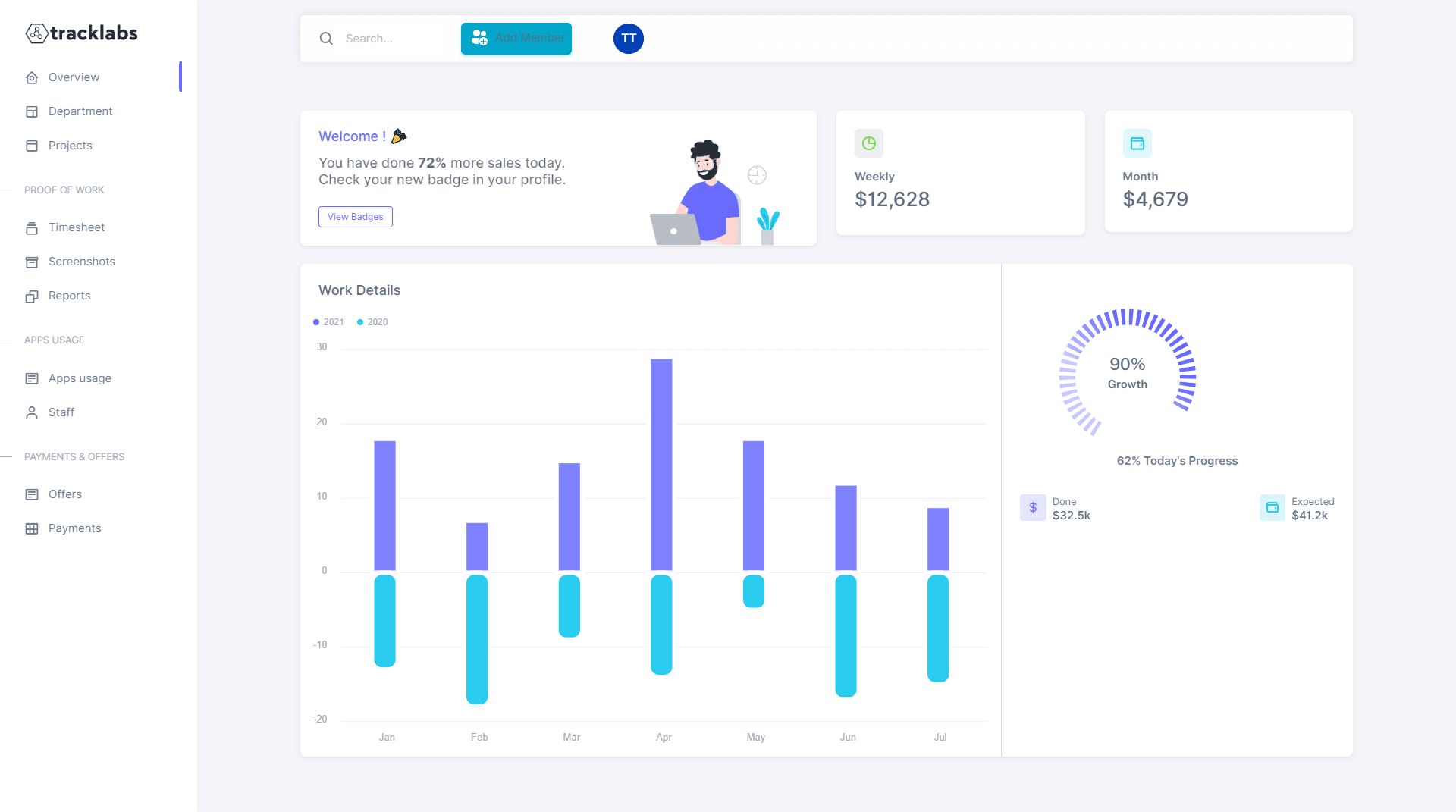
Managers don't need more raw data—they need answers. How productive was the team this week? Which projects are consuming the most hours? Who might be overloaded before burnout hits?
Traditional time tracking gives you timestamps. AI-powered time tracking gives you context, patterns, and recommendations. Here are seven ways that changes how you lead your team.
1. Automatic Pattern Detection
AI analyzes activity over days and weeks to surface trends you would miss in a spreadsheet: recurring idle periods, sudden drops in focus time, or apps that consistently interrupt deep work. Instead of reviewing hundreds of time entries, you get a summary of what changed and why it matters.
2. Smarter Productivity Scoring
Not all hours are equal. AI distinguishes between active work, idle time, and context switching—giving you a more honest picture of output than clock hours alone. This helps you reward real productivity instead of presence.
3. Early Burnout Signals
When someone consistently works late, skips breaks, or shows declining activity scores, AI flags it before performance crashes. Managers can intervene with workload adjustments or support—turning data into a retention tool, not a surveillance weapon.
4. Faster Timesheet Review
AI pre-sorts entries, flags anomalies, and groups time by project or client. What used to take an hour of manual review can take minutes. Your timesheet approval workflow becomes a quick sanity check, not a forensic investigation.
5. Better Project Forecasting
By learning how long similar tasks actually take, AI improves future estimates. Stop underquoting clients and overloading your team. Historical time data becomes a planning asset instead of an archive nobody reads.
6. Reduced Admin Burden
Managers spend less time chasing missing timesheets, correcting errors, and building reports manually. AI handles categorization, summarization, and export—freeing you to coach, plan, and solve problems.
7. Data-Driven 1-on-1 Conversations
Instead of vague "you seem busy" discussions, you bring specific, objective insights: focus time trends, meeting load, project allocation. Conversations become constructive because they're grounded in shared facts.
How to Get Started with AI Time Tracking
- Enable automatic time tracking for your team with clear communication about why
- Review AI-generated summaries weekly instead of raw logs daily
- Use insights for coaching and capacity planning—not punishment
- Combine AI data with workforce analytics reports for leadership reviews
Conclusion
AI-powered time tracking turns hours of manual review into actionable insights. Managers who adopt it spend less time on admin and more time supporting their teams—without crossing into micromanagement.
Try TrackLabs AI Today
See how AI-powered insights change the way you manage your team. Start your free 2-day trial—no credit card required.
Start Free Trial →