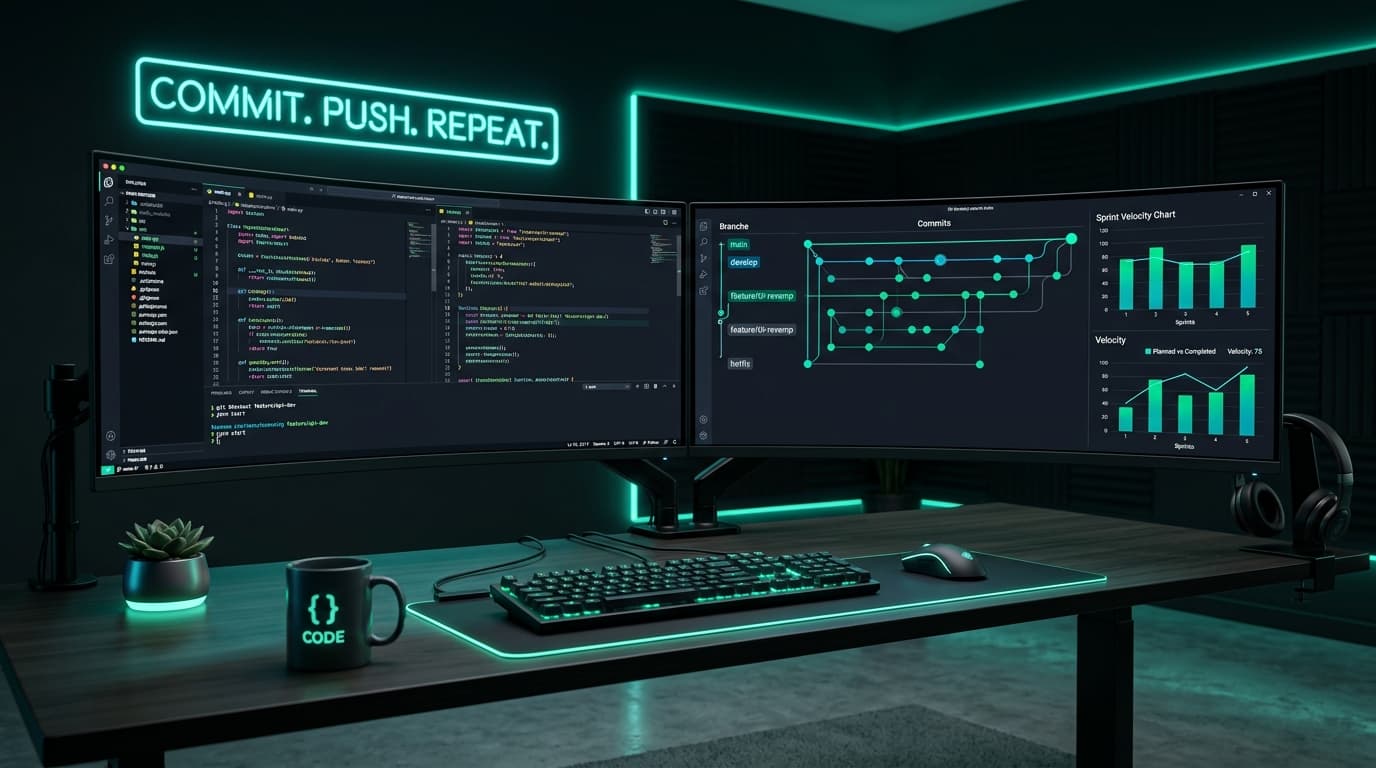
The Engineering Productivity Paradox
Managing distributed development teams across different time zones is one of tech leadership’s toughest challenges. Without co-located desks, inexperienced managers often overcompensate with excessive video check-ins and invasive tracking widgets that alienate senior talent.
High-performance engineering organizations use project time tracking tools to establish high-trust transparency: measuring sprint throughput, identifying blocking dependencies, and protecting developers’ flow state.
average daily deep work window required for high-velocity software engineering.
of sprint delays are caused by inaccurate initial task scoping and unrecorded tech debt.
faster PR merge times achieved when asynchronous status updates replace daily standups.
Why Lines of Code & Hours Fail as Metrics
Vanity metrics produce toxic incentives. When engineering leaders evaluate developers on shallow signals, system quality degrades rapidly:
❌ Flawed Vanity Metrics
- Lines of Code (LOC): Encourages verbose, un-refactored boilerplate over elegant, reusable abstractions.
- Raw Hours Logged: Rewards slow execution and late-night fatigue over high-leverage architectural breakthroughs.
- Commit Count: Incentivizes developers to split single logical changes into 15 meaningless mini-commits.
✅ High-Signal Outcome Metrics
- PR Cycle Time: Time elapsed from first commit to production deployment.
- Protected Flow Time: Continuous 90+ minute uninterrupted blocks in IDEs and compilers.
- Sprint Estimate Accuracy: Percentage variance between estimated story points and actual logged effort.
4 High-Signal Developer Productivity Metrics
To maintain high delivery velocity without developer burnout, track these four structural indicators:
1. Uninterrupted Focus Ratio
The proportion of the workday spent in deep focus tools (VS Code, IntelliJ, terminal, documentation) versus communication overhead.
2. Work In Progress (WIP) per Engineer
Limiting developers to 1 or 2 active tickets at a time prevents cognitive fragmentation and slashes multi-tasking lag.
3. Rework & Bug-Fix Ratios
Measuring the time spent resolving regression bugs versus deploying new user value highlights architectural debt before releases break.
4. Sprint Allocation Fidelity
Ensuring logged engineering hours accurately reflect planned roadmap priorities rather than ad-hoc fire drills.
1. Protecting Flow: Eliminating Meeting Fragmentation
Paul Graham famously outlined the divide between the Maker’s Schedule and the Manager’s Schedule. A single 15-minute meeting in the middle of an afternoon can ruin an entire four-hour coding block.
Using TrackLabs productivity analytics, engineering leaders can audit calendar fragmentation across squads:
- No-Meeting Days: Mandate Tuesday and Thursday as completely meeting-free execution days.
- Clustered Office Hours: Consolidate 1-on-1s and backlog refinement into designated morning or late-afternoon clusters.
- Notification Snoozing: Encourage developers to switch team chat to do-not-disturb while executing critical algorithms.
2. Real-Time Sprint Allocation vs. Estimates
Sprint retrospectives often devolve into guessing games: “Why did Ticket DEV-402 take 3 weeks instead of 3 days?”
With TrackLabs integrated into your workflow:
- Developers start a lightweight timer mapped directly to their assigned task ticket.
- Automated budget thresholds alert tech leads when a 10-hour task reaches 8 hours, triggering peer reviews before deadlines are breached.
- Historical data provides objective benchmarks for estimating future user stories during grooming sessions.
3. Replacing Synchronous Standups with Automated Proof
Daily 30-minute standups across 5 time zones force engineers to sit through status updates that are irrelevant to their immediate tasks.
By leveraging real-time activity dashboards, engineering managers have instant visibility into:
- Which modules are currently active and being refactored
- Automated timesheets itemized by milestone and branch
- Clear visibility into blockers without scheduling intrusive emergency calls
Case Study: 35% Faster Sprint Velocity
Fintech Scaleup Engineering Squad (24 Distributed Engineers)
By replacing daily synchronous standups with TrackLabs automated timesheet tracking and implementing two dedicated No-Meeting Days per week, the team increased weekly uninterrupted coding hours from 14.5 hours to 26.2 hours per engineer. Sprint completion rates improved by 35% within one quarter.
Equip Your Engineering Squad for High Velocity
Give your developers the gift of uninterrupted focus while keeping sprint stakeholders completely in sync. Start your free 2-day trial today.

Specializes in distributed workforce telemetry, privacy-first employee monitoring, and labor compliance systems at TrackLabs.
Frequently Asked Questions
Ready to boost your team productivity?
Start your free 2-day trial with TrackLabs. No credit card required.
No credit card required · Setup in minutes · Cancel anytime